
FITNESS AND WEIGHT LOSS BLOG
The Science of Motivation: How to Trick Your Brain Into Training | Game Changing Performance
Let's start with something most fitness coaches won't admit out loud.
Motivation is not a personality trait. It is not something some people have and others don't. It is not the reward you get for being disciplined enough, committed enough, or wanting it badly enough. Motivation is a biological process. It is chemicals and circuits and timing. And like any system, once you understand how it works, you can learn to work with it instead of fighting it every single day.
Because right now, if you've ever felt like motivation is something that just randomly shows up and then disappears on you, you are not failing at fitness. You are just working against your own brain without realizing it.
The good news? Your brain is not the enemy. It's actually incredibly responsive to the right inputs. It wants to feel good. It wants to seek reward. It wants to repeat experiences that made it feel capable and connected. And when you build a fitness routine that understands all of that, the motivation stops feeling like something you have to chase.
It starts chasing you.
At Game Changing Performance in Mundelein, we've built an entire training environment around this reality. The science is real. The strategies are simple. And the results speak for themselves in every member who walks through our doors convinced they have a motivation problem and leaves realizing they just needed a smarter system.
Why Your Brain Fights the Gym (And How to Stop the War)
Here is what's actually happening when you set your gym alarm the night before and then snooze it four times in the morning.
Your brain has one deeply wired priority: keep you safe and conserve energy. From an evolutionary standpoint, unnecessary physical exertion was a liability. You moved when you had to. You rested when you could. The brain that sent ancient humans sprinting after a meal is the same brain sitting in your skull right now, and it still reads optional physical discomfort as something to avoid.
On top of that, the prefrontal cortex, the part of your brain responsible for long-term planning and delayed gratification, is in constant low-level conflict with the limbic system, which handles immediate reward. The goal you set three weeks ago to get in shape lives in your prefrontal cortex. The couch that feels good right now lives in your limbic system. When you're tired and stressed and depleted, the limbic system wins almost every time.
This is not weakness. This is neuroscience.
The goal isn't to eliminate that conflict. It's to stop relying on willpower to win it and start designing an environment where the rewarding option and the healthy option are the same thing. That's exactly what the strategies below are built to do.
Want a program designed around how your brain actually works?
Book Your Free Transformation Strategy Session at GCP Today!
6 Science-Backed Strategies to Trick Your Brain Into Training
1. Dopamine First, Discipline Second
Dopamine is the neurotransmitter most people associate with pleasure, but that's not quite right. Dopamine is actually the chemical of anticipation. It surges before the reward, not after it. It's what makes you check your phone before you know there's a notification. It's what drives action.
What this means for fitness is that your brain needs something to look forward to before the workout, not just after it. That might sound obvious, but most fitness programs give you nothing to anticipate except soreness and a number on a scale that may or may not move this week.
At Game Changing Performance, we engineer anticipation into the training experience. Challenges with stakes. Milestones that are visible and specific. A community that makes Tuesday night feel like an event rather than an obligation. When your brain starts releasing dopamine at the thought of your next session, motivation stops being something you manufacture through discipline. It becomes a response your nervous system generates automatically.
Try This: Pair your workouts with something your brain genuinely looks forward to. Your favorite playlist that only plays during training. A post-workout meal you love. A specific piece of gear you only use at the gym. You are not bribing yourself. You are giving your dopamine system a target.
2. The Two-Minute Rule and the Power of Starting
One of the most well-documented phenomena in behavioral science is that starting is almost always the hardest part. Once you're in motion, the brain recalibrates. The limbic system that was resisting the workout gets swept up in the momentum of it. Effort begins to feel purposeful rather than threatening.
This is why the two-minute rule is so effective: commit only to the first two minutes. Tell yourself you're just going to change into your gym clothes. Just going to drive to the gym. Just going to do the warm-up. Remove the full weight of the workout from the decision and replace it with the smallest possible step.
What happens in practice? The vast majority of the time, once you've done the two minutes, you finish the session. Because the resistance wasn't about the workout. It was about the gap between rest and motion. Once you cross that gap, the rest is momentum.
Try This: On your hardest days, your only job is to get in the car. The workout can take care of itself once you're there. At GCP, our coaches understand that showing up is always the biggest victory. Everything after that is just details.
3. Identity Over Outcome: Become the Person Before You Have the Results
There is a significant difference between someone who says "I'm trying to work out more" and someone who says "I'm a person who trains." That difference is not semantic. It is neurological.
Research by behavioral scientist James Clear and others has consistently shown that identity-based habits are dramatically more durable than outcome-based habits. When your workout is tied to an outcome (lose 20 pounds, fit into those jeans), every week without visible progress becomes evidence that the habit isn't working. But when the workout is tied to identity (this is who I am), every session is evidence that you are already the person you set out to become.
The brain is a pattern-recognition machine. It is constantly looking for evidence that confirms its beliefs about who you are. Every time you show up for a workout, you cast a vote for a particular identity. Over time, the votes stack up. The identity solidifies. And the behavior that once required enormous effort starts to feel like something you just do, because it's who you are.
Try This: Start small. You don't need to run a marathon to call yourself someone who trains. Three sessions this week makes you someone who trains three times a week. That's the identity. Build from there.
4. Use Social Accountability Like the Performance Tool It Is
Human beings are wired for social belonging. Thousands of years of evolution built us to care deeply about what our group thinks of us, about whether we're pulling our weight, about not letting the people we care about down. The fitness industry largely ignores this and sells you programs designed for solo execution. Then it wonders why nobody finishes them.
External accountability is one of the most powerful performance tools available. Studies on exercise adherence show that people who work out with a partner or in a group setting exercise more frequently, push harder during sessions, and sustain their habits for significantly longer than those training alone.
At Game Changing Performance, accountability is baked into everything we do. Coaches know your name and your schedule. Members notice when you're missing. The community celebrates wins publicly and checks in when someone goes quiet. That social layer isn't a nice-to-have. It is a core part of why our members get results that solo training never delivered.
Try This: Tell one specific person your training schedule this week. Not your goal, your schedule. "I'm training Monday, Wednesday, and Friday." The act of saying it out loud to someone who will notice activates an entirely different level of follow-through than a private intention ever will.
Want accountability built into every session, every week?
Explore Our Accelerated Fat Loss Program at GCP!
5. Reward the Process, Not Just the Outcome
The most common mistake in fitness motivation is placing all the reward at the end. You'll feel great when you lose the weight. You'll celebrate when you hit your goal. You'll be proud of yourself when you finally look the way you want to look.
But the brain doesn't run on future rewards. It runs on current feedback. If the experience of training itself only ever feels like sacrifice, your nervous system will always be working against you, because on some level it believes that the workout is the cost of admission to a future that may or may not arrive.
The solution is to make the process itself rewarding. Track metrics that improve week over week so you can see progress in real time. Celebrate hitting a personal record with the same energy you'd give a major milestone. Notice how you feel after a session and name it out loud. The more your brain associates the act of training with positive feeling, the more it will push you toward the gym rather than away from it.
At GCP, the Wodify Pulse system exists for exactly this reason. Every session produces data. Every data point tells a story of improvement. Every story of improvement rewards the brain that made it happen. It creates a feedback loop that makes motivation self-sustaining rather than something you have to manually restart every Monday.
Try This: After your next workout, write down one specific thing that was better than last time. One extra rep. A few more seconds on a hold. Slightly less rest needed between sets. The brain responds to evidence. Give it some.
6. Reduce Friction Until It's Almost Embarrassingly Easy to Start
Motivation research is clear on this: the harder it is to start a behavior, the less likely you are to do it when your willpower is depleted. And willpower is almost always depleted by the time the average person gets to their workout after a full day of work, parenting, commuting, and just existing in the world.
Friction reduction is the practice of making the healthy behavior so easy to initiate that exhaustion can't stop it. Gym bag packed the night before. Workout clothes laid out on the chair. Water bottle already filled. Gym location close enough to home or work that the commute itself isn't a decision point.
In Mundelein, Game Changing Performance's location is accessible by design. Our session times are built around real schedules. Our onboarding process removes the confusion of "what do I even do when I get there" by giving every member a clear plan from day one. We take friction out of the equation because we know that the version of you at 6pm on a Thursday doesn't have the same reserves as the version of you who made the goal on Sunday morning. We design for the tired version. Because that's the version that needs to show up most.
Try This: This week, identify the single biggest friction point between you and your workout. Is it not knowing what to do? Not having a gym you enjoy? No one to go with? Eliminate just that one thing. The difference is often larger than people expect.
The GCP Difference: A Training Environment Designed for Your Brain, Not Just Your Body
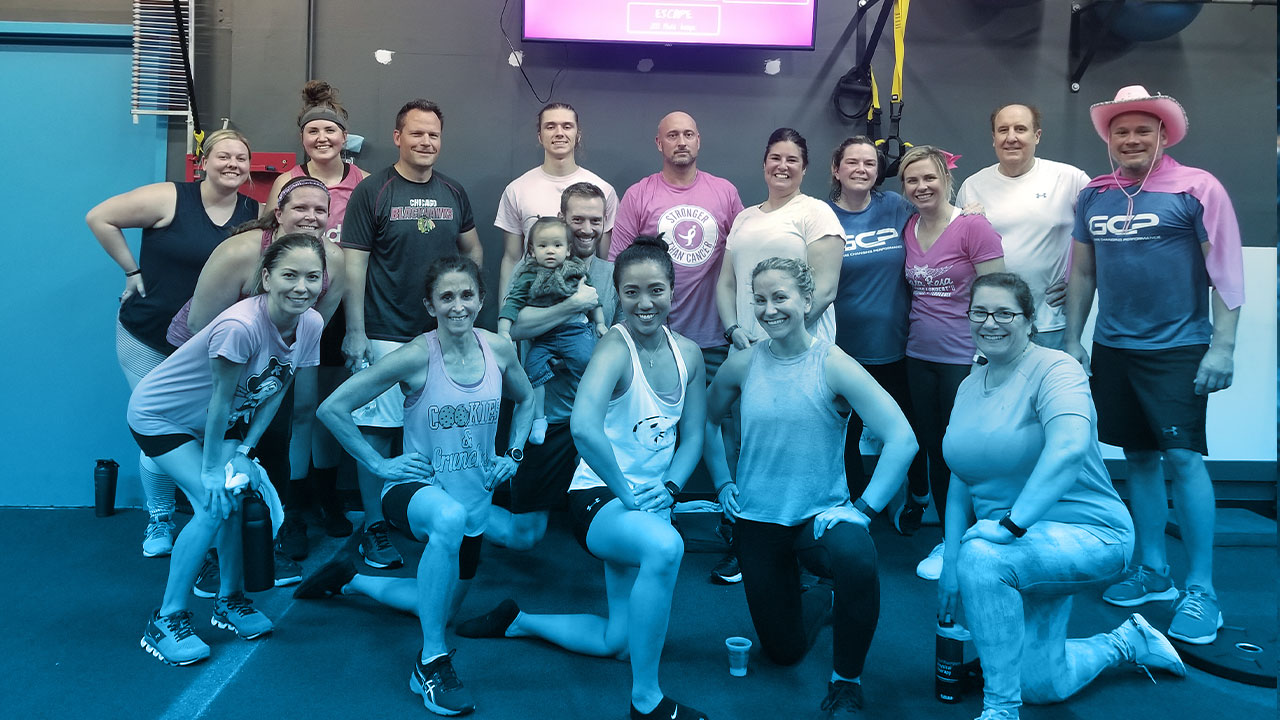
Everything described above, the dopamine engineering, the identity building, the social accountability, the friction reduction, is not theory at Game Changing Performance. It is practice. It is built into the way we program sessions, the way our coaches interact with members, and the culture we've intentionally created inside our Mundelein facility.
We don't just hand you a workout and wish you luck. We create the conditions under which motivation becomes natural. We understand that results are not just a product of effort. They are a product of environment. And when the environment is right, effort follows.
Our members don't describe themselves as highly motivated people. Most of them will tell you they struggled with consistency for years before finding GCP. What changed wasn't their discipline. It was their system. It was having coaches who understood what they needed. It was a community that made the gym feel like something worth showing up for. It was a program that gave them something specific to chase every single week.
That is what motivation looks like when it's built on science instead of willpower. It's quieter. It's more durable. And it doesn't disappear the moment life gets hard.
Frequently Asked Questions
Is it normal to feel motivated at first and then lose it completely?
Extremely normal, and it is actually predictable based on how the brain works. The initial surge of motivation when you start something new is driven by novelty dopamine, your brain rewarding you for a new experience. When the novelty fades, that dopamine surge fades with it. The solution isn't to keep chasing novelty. It's to build systems and habits that sustain behavior after the initial excitement wears off. That's precisely what GCP's program structure is designed to do.
What if I'm motivated at the weekend but can't seem to get going during the week?
This is a friction and scheduling problem more than a motivation problem. Weekend motivation often comes with more time, fewer obligations, and lower stress, all of which reduce the psychological cost of training. During the week, the cost is higher, so motivation has to be stronger to override it. The fix is reducing that cost: shorter sessions, closer location, pre-planned workouts, accountability. At GCP, we help members build a weekly structure that accounts for their real life, not an ideal version of it.
Can motivation be trained, like a muscle?
In a meaningful sense, yes. The more consistently you act on a behavioral intention, the more automatic that behavior becomes, and the less motivational energy it requires. This is neuroplasticity in action. Over time, the brain literally builds stronger neural pathways for behaviors you repeat regularly. The first few weeks are the hardest. After that, the habit starts to carry itself. Your job is just to survive the first few weeks with enough structure and support to stay consistent.
How does GCP help with motivation specifically?
We engineer it into the experience. Coach-led sessions remove the decision fatigue of planning your own workout. Real-time tracking with Wodify Pulse gives your brain immediate feedback and reward. Community accountability means someone notices when you show up and when you don't. Challenges and milestones give your dopamine system something specific to anticipate. And our nutrition coaching ensures the habits outside the gym reinforce the ones inside it. It's a complete system, not a single lever.
What if I've failed at staying consistent before? How is this time different?
Past inconsistency is information, not destiny. Most of the time, it tells us that the previous environment wasn't right. The program wasn't engaging. The accountability wasn't there. The workouts weren't enjoyable. None of those things are character flaws. They're design problems. And design problems have design solutions. At GCP, your first session starts with understanding why previous attempts didn't stick, so we can build something that actually does.
Stop Waiting for Motivation. Start Building the System That Creates It.
Motivation is not a lightning bolt. It doesn't strike randomly and carry you through six months of consistent training on its own. It is a response. It responds to environment, to community, to feedback, to identity, to the small daily signals your brain receives about whether this behavior is worth repeating.
When those signals are right, showing up becomes easier. And then easy becomes automatic. And then one day you realize that the version of you who couldn't drag themselves to the gym is someone you barely remember anymore.
That is what Game Changing Performance in Mundelein is built to create. Not a temporary motivation spike. A permanent shift in how your brain relates to training. One that doesn't collapse when life gets hard, because it was never built on willpower in the first place.
Your brain wants to feel good. It wants to feel capable. It wants to be part of something. We built a program around all three. The only thing standing between you and the version of yourself who actually loves training is a first session.
Ready to stop fighting your brain and start working with it?
Start Your 28 Days for $28 Trial at GCP Today!

START YOUR TRANSFORMATION TODAY
Ready To Jumpstart Your Journey Today?
Click The Button Below To Learn More!

300 Washington Blvd
Mundelein, Illinois 60060


© 2026 Game Changing Performance
300 Washington Blvd
Mundelein, Illinois 60060
© 2026 Game Changing Performance