
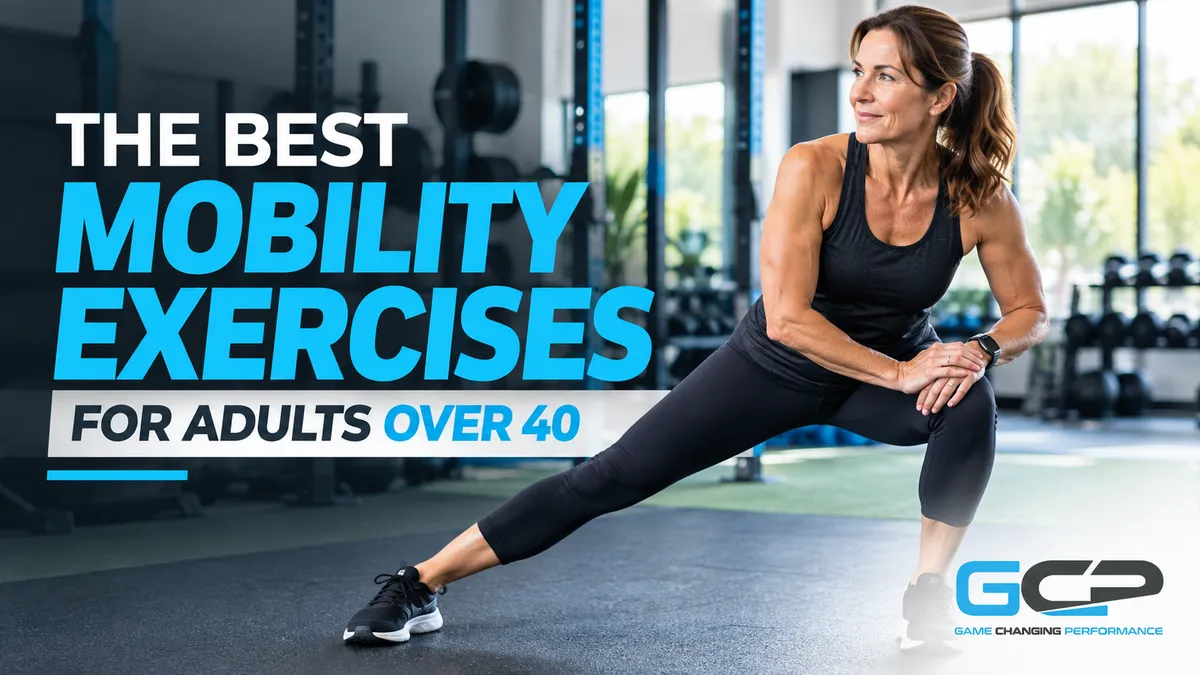
The Best Mobility Exercises for Adults Over 40
Want to move better, feel stronger, and stay active as you get older? The best mobility exercises for adults over 40 can help you improve your range of motion, maintain flexibility, and move more comfortably through everyday activities. Whether you're getting back into the gym, spending long hours at a desk, or trying to keep up with your favorite sports, mobility training deserves a place in your fitness routine.
As you get older, staying active becomes about more than lifting heavier weights or completing intense workouts. It also means maintaining the ability to bend, reach, squat, turn, and move with confidence. The good news? You don't need an advanced workout plan or hours of stretching to get started.
With a few simple exercises and a consistent approach, you can make mobility a practical part of your weekly fitness routine.
In this guide, Game Changing Performance explains the best mobility exercises for adults over 40, how to perform them safely, and how to build a routine that supports long-term movement and performance.
What Are Mobility Exercises?
Mobility exercises are movements that help you maintain or improve the range of motion of your joints while developing the control needed to move through that range.
Mobility and flexibility are related, but they are not exactly the same.
Flexibility refers to how far a muscle can lengthen.
Mobility refers to your ability to move a joint through its available range of motion with control.
For example, you might be flexible enough to reach toward your toes but still struggle to squat comfortably or rotate your upper body. Mobility training combines controlled movement, coordination, and, when appropriate, strength to help you use your available range of motion.
For adults over 40, mobility exercises can support everyday tasks such as climbing stairs, reaching overhead, getting up from the floor, and turning to look behind you.
Why Mobility Training Matters After 40
Turning 40 doesn't mean your body has to become stiff or your workouts have to slow down. However, changes in activity levels, accumulated training stress, and spending long periods sitting can affect how comfortable and capable you feel when moving.
A consistent mobility routine can help you address common movement limitations while supporting an active lifestyle.
1. Maintain a Comfortable Range of Motion
Regular movement through a comfortable range can help you maintain the mobility needed for everyday tasks and exercise.
Hip mobility, for example, plays a role in squatting, walking, and climbing stairs. Shoulder mobility helps with reaching overhead, getting dressed, and performing upper-body exercises.
2. Make Everyday Activities Easier
Mobility training isn't only for athletes. It can help you practice the movement patterns used throughout the day, from bending down to pick something up to reaching for an item on a high shelf.
The goal is to make movement a regular part of your life rather than something you only think about during workouts.
3. Support Better Workout Technique
Limited mobility can make certain exercises more difficult to perform comfortably or with good technique. Controlled mobility drills can help you explore your available range of motion before strength training.
Your individual needs will vary, so exercises should be selected according to your current ability, comfort, and training goals.
4. Complement Strength and Balance Training
Mobility works best as part of a balanced fitness program. Strength training helps you build and maintain muscle, while balance exercises help develop stability and coordination.
For additional guidance, read our article on Why Functional Fitness Matters More Than Ever After 40.
8 Best Mobility Exercises for Adults Over 40
You don't need complicated equipment to get started. The following mobility exercises cover the hips, ankles, spine, shoulders, and upper back.
Move slowly, breathe normally, and stay within a comfortable range. The repetitions below are suggested starting points, not strict requirements.
1. Cat-Cow Stretch
Best for: Spinal movement and gentle back mobility.
The cat-cow stretch takes your spine through controlled rounding and arching. It's a useful option for people who want to begin their routine with gentle movement.
How to do it:
Start on your hands and knees, with your hands under your shoulders and knees under your hips.
Slowly round your back and gently tuck your chin.
Reverse the movement by gently lifting your chest and allowing your back to arch comfortably.
Continue alternating between the two positions without forcing the movement.
Suggested starting point: 8–10 slow repetitions.
Coaching tip: Keep the movement smooth rather than trying to create the biggest possible arch. If kneeling is uncomfortable, choose a supported alternative.
2. 90/90 Hip Rotations
Best for: Practicing hip rotation.
Your hips contribute to walking, squatting, lunging, and changing direction. This exercise helps you practice rotating your hips in a controlled position.
How to do it:
Sit on the floor with one leg bent in front of you and the other bent to the side, creating roughly 90-degree angles at both knees.
Keep your torso upright as comfortably as possible.
Slowly rotate both legs to the opposite side.
Use your hands for support and reduce the range if needed.
Suggested starting point: 5–8 controlled transitions per side.
Coaching tip: Don't force your knees toward the floor. If sitting on the floor is difficult, a seated hip rotation or another supported drill may be more appropriate.
3. Half-Kneeling Hip Flexor Stretch
Best for: Practicing hip extension.
Long periods of sitting can leave some people feeling restricted around the front of their hips. This stretch helps you gently explore hip extension.
How to do it:
Kneel on one knee with the other foot planted in front of you.
Keep your torso upright and use a wall or sturdy support for balance.
Gently tuck your pelvis and tighten the glute of the kneeling leg.
Shift your body forward slightly until you feel a mild stretch at the front of that hip.
Hold, then switch sides.
Suggested starting point: 20–30 seconds per side.
Coaching tip: Avoid arching your lower back to create a deeper stretch. A small, controlled movement is enough.
4. Ankle Knee-to-Wall Mobilization
Best for: Ankle mobility and comfortable lower-body movement.
Ankle movement contributes to walking, stair climbing, and many squat variations. This drill helps you practice moving your knee forward over your foot while keeping your heel down.
How to do it:
Stand facing a wall with one foot a short distance away.
Keep your heel planted on the floor.
Slowly move your knee toward the wall in line with your toes.
Move your foot closer or farther away to find a comfortable range.
Repeat and switch sides.
Suggested starting point: 8–10 repetitions per side.
Coaching tip: If your heel lifts or your ankle feels pinched, reduce the range. The goal is controlled movement, not forcing your knee as far forward as possible.
5. Thoracic Spine Rotations
Best for: Upper-back rotation.
Your upper back contributes to the rotational movements used in sports, reaching, and everyday activities. This exercise helps you practice that rotation without aggressively twisting your lower back.
How to do it:
Lie on your side with your knees bent and stacked.
Extend your arms in front of you, with your palms together.
Slowly open your top arm toward the opposite side while rotating your upper back.
Keep your knees together and rotate only as far as comfortable.
Return to the starting position and repeat.
Suggested starting point: 6–8 repetitions per side.
Coaching tip: Move slowly and follow your hand with your eyes if comfortable. Don't pull your arm into a position your body cannot reach naturally.
6. Shoulder Wall Slides
Best for: Practicing controlled shoulder movement.
Shoulder mobility is useful for reaching overhead and performing many upper-body exercises. Wall slides let you practice raising your arms while using the wall as a guide.
How to do it:
Stand facing a wall or with your back against it, depending on which position feels more comfortable.
Place your forearms against the wall if your range allows.
Slowly slide your arms upward without forcing your shoulders.
Return to the starting position with control.
Keep the movement within a pain-free range.
Suggested starting point: 8–10 repetitions.
Coaching tip: Don't force your arms overhead or shrug aggressively. If the movement causes shoulder pain, stop and choose a suitable alternative.
7. Bodyweight Squat to a Box or Bench
Best for: Practicing hip, knee, and ankle movement together.
A supported squat is a practical mobility exercise because it rehearses a movement pattern used in everyday life, including sitting down and standing up.
How to do it:
Stand in front of a sturdy bench or box with your feet about shoulder-width apart.
Reach your hips back and bend your knees as you lower yourself toward the surface.
Lightly touch the bench or sit down under control.
Press through your feet and stand back up.
Use a higher bench or a hand support if needed.
Suggested starting point: 6–10 repetitions.
Coaching tip: Choose a depth you can control comfortably. You don't need to squat deeply to practice useful movement.
8. Standing Calf Raises
Best for: Ankle movement and lower-leg strength.
Calf raises combine controlled ankle movement with strengthening. They can complement a mobility routine while helping you practice pushing through the balls of your feet.
How to do it:
Stand near a wall, counter, or sturdy support.
Keep your feet about hip-width apart.
Slowly lift your heels off the floor.
Pause briefly at the top.
Lower your heels with control.
Suggested starting point: 8–12 repetitions.
Coaching tip: Keep your weight distributed across your feet and use support if your balance needs extra attention.
A Simple 10-Minute Mobility Routine for Adults Over 40
The easiest mobility routine to maintain is one that fits into your schedule. Start with the following sequence and adjust it to your needs.
Exercise | Suggested time or repetitions |
Cat-cow stretch | 8–10 repetitions |
90/90 hip rotations | 5 per side |
Half-kneeling hip flexor stretch | 20 seconds per side |
Ankle knee-to-wall mobilization | 8 per side |
Thoracic spine rotations | 6 per side |
Shoulder wall slides | 8 repetitions |
Move through the exercises without rushing. Depending on your pace and rest periods, this sequence may take slightly more than 10 minutes.
You can use it before a workout, during a movement break, or as a short standalone session on a day when you want to move without doing an intense workout.
How often should you do mobility exercises?
A practical starting point is to practice for 5–10 minutes on several days each week. You can also include selected mobility drills in your warm-up before strength training.
Consistency matters more than trying to complete a long routine once and then forgetting about it.
How to Improve Mobility Safely After 40
Mobility exercises should challenge your movement gently, not leave you struggling through pain.
Use these guidelines to build a sustainable routine.
Start With Your Current Ability
If you've been inactive for a while, begin with a smaller range of motion and fewer repetitions. Supported versions of exercises may be more appropriate than floor-based or balance-demanding movements.
Warm Up Before More Demanding Exercise
Start with a few minutes of easy walking or gentle movement before progressing to more demanding drills. Your warm-up should prepare you for the activity that follows.
Avoid Forcing a Stretch
A mild stretching sensation may be normal, but sharp pain, joint pinching, numbness, or worsening symptoms are reasons to stop. More range is not automatically better.
Combine Mobility With Strength Training
Mobility drills help you practice movement, while strength exercises help you develop the ability to produce force and control your body. Combining both can support a more complete fitness routine.
For more guidance, explore our article on How Strength Training Boosts Longevity for Adults Over 40.
Make Recovery Part of Your Plan
Your routine should fit your recovery needs and overall activity level. If you regularly feel exhausted, sore, or unable to complete your usual activities, consider adjusting your training volume and intensity.
Read our guide to The Best Recovery Routine After Every Workout for more practical recovery strategies.
Get Professional Guidance When Needed
If you have a recent injury, persistent joint pain, a balance concern, or a medical condition that affects movement, speak with a qualified healthcare professional before beginning unfamiliar exercises. A physical therapist can help you choose appropriate movements when specific limitations need attention.
Mobility vs. Flexibility vs. Strength Training: What's the Difference?
These three components work together, but each serves a different purpose.
Training type | Main purpose | Example |
Mobility | Practice controlled joint movement | Ankle knee-to-wall drill |
Flexibility | Improve or maintain muscle length | Hip flexor stretch |
Strength training | Build muscular strength and capacity | Squats or resistance exercises |
You don't need to choose just one. A balanced fitness program can include all three, along with cardiovascular activity and balance work.
For adults 65 and older, the CDC recommends a combination of aerobic activity, muscle-strengthening activity, and balance exercises. Adults in their 40s and 50s can also benefit from building a varied routine suited to their abilities and goals.
For broader guidance, see the CDC's physical activity recommendations for older adults.
Frequently Asked Questions About Mobility Exercises for Adults Over 40
1. What are the best mobility exercises for adults over 40?
Useful options include cat-cow stretches, 90/90 hip rotations, hip flexor stretches, ankle mobilizations, thoracic spine rotations, shoulder wall slides, supported squats, and calf raises. The best exercises for you depend on your current mobility, comfort, fitness level, and goals.
2. How often should adults over 40 do mobility exercises?
A reasonable starting point is 5–10 minutes on several days each week. You can also add a few mobility exercises to your warm-up before strength training. Adjust the frequency based on your needs and recovery.
3. Can mobility exercises improve flexibility after 40?
Yes. Regular stretching and controlled movement can help maintain or improve flexibility and joint range of motion. Progress depends on consistency, the exercises you choose, and your starting point.
4. Is mobility training better than stretching?
Neither is universally better. Stretching primarily targets flexibility, while mobility training emphasizes controlled movement through a joint's available range. Both can be useful parts of a balanced fitness program.
5. Can I do mobility exercises every day?
Many gentle mobility movements can be practiced daily if they feel comfortable and do not aggravate existing symptoms. You don't need to perform every exercise every day. Vary your routine according to your training schedule and individual needs.
6. Do mobility exercises help with stiff hips and shoulders?
They may help improve movement and flexibility when stiffness is related to limited mobility or inactivity. However, stiffness can also have medical causes. Persistent, worsening, or painful symptoms should be evaluated by a healthcare professional.
7. Should I do mobility exercises before or after a workout?
Both can be useful. Controlled mobility drills often work well during a warm-up, while gentle stretching can be included after exercise or in a separate session. Choose movements that prepare you for the activity you plan to do.
8. Can beginners do mobility exercises at home?
Absolutely. Many mobility exercises require only a floor mat, a wall, or a sturdy chair. Start with supported movements, use a comfortable range, and progress gradually as your control improves.
9. How long does it take to improve mobility?
There is no universal timeline. Your progress depends on your starting mobility, consistency, exercise selection, and individual circumstances. Focus on gradually improving comfort and control rather than expecting an overnight transformation.
Build Better Movement Habits With Game Changing Performance
You don't have to accept stiffness as an unavoidable part of getting older. A consistent mobility routine can help you practice the movements that matter in everyday life and prepare your body for more challenging activities.
Start small. Choose a few exercises, practice them with control, and gradually build a routine that works for you. Combine mobility work with strength training, regular physical activity, and appropriate recovery to support your long-term fitness goals.
At Game Changing Performance, the goal is to help you train with purpose, build confidence, and keep making progress at every stage of life.
Ready to take the next step in your fitness journey?
Explore Game Changing Performance to learn more about our coaching and training options. If you're ready for a more structured approach, connect with our team to discuss a fitness plan tailored to your goals, current ability, and lifestyle.
Move better. Train smarter. Keep changing the game.