
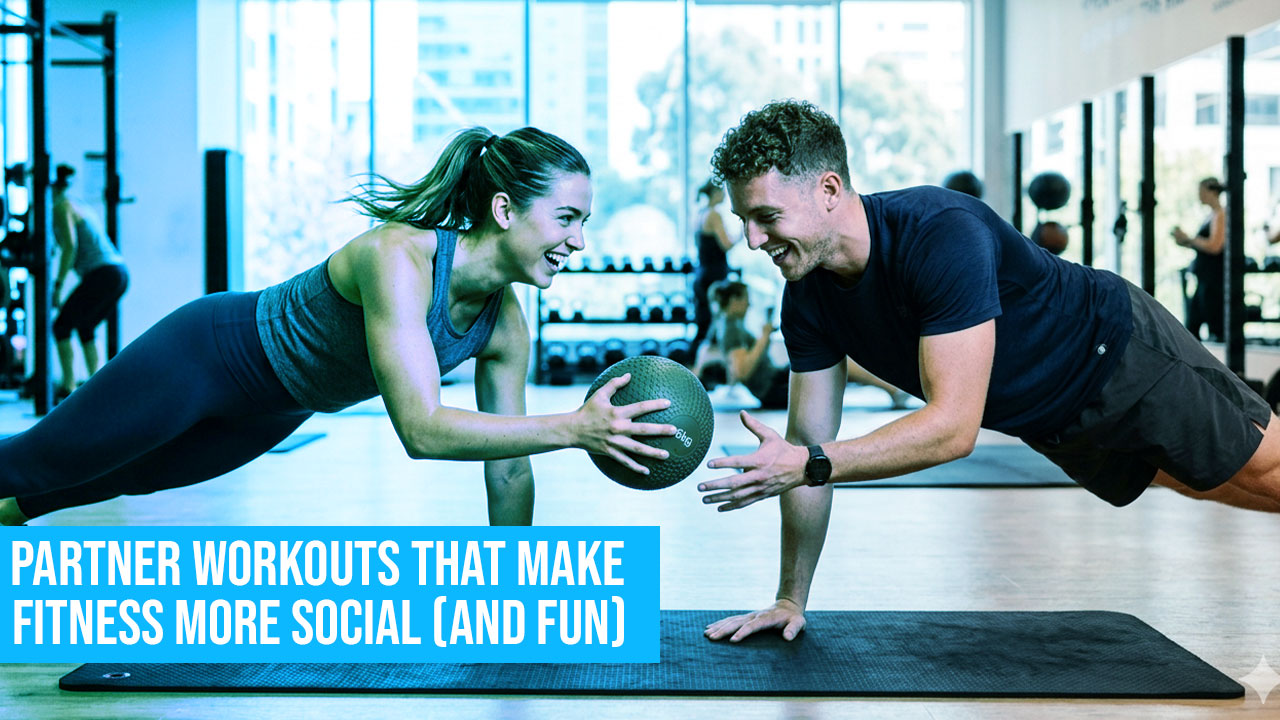
Partner Workouts That Make Fitness More Social (and Fun) | Game Changing Performance
Here is something the solo fitness grind never tells you.
The hardest part of getting in shape is not the workout. It is not the early mornings, the sore muscles, or even the nutrition. The hardest part is showing up when you don’t feel like it. When life is heavy, when the couch is calling, when every excuse feels completely reasonable.
And here is what research, real-world coaching experience, and thousands of transformation stories have proven over and over again: the single most reliable antidote to that problem is another person standing next to you expecting you to show up.
Partner workouts are not just a fun twist on your regular training. They are one of the most powerful performance tools available to anyone trying to build a consistent fitness habit. They change the psychology of showing up. They change the intensity of the session itself. And they change the way fitness feels, from something you have to force yourself through to something you actually look forward to.
At Game Changing Performance in Mundelein, we have built a training environment where the social side of fitness is not an afterthought. It is part of the design. Because we know that people who train together get results that people who train alone rarely reach. And the science backs that up completely.
Why Your Brain Is Wired to Work Harder Together
Before we get into the specific workouts, it is worth understanding why partner training works at such a deep level.
Human beings are not built for isolation. Thousands of years of evolution shaped us to perform in groups, to care about what our people think of us, and to rise to the level of those around us. That wiring doesn’t switch off at the gym door. It shows up in the data.
A study published in the Annals of Behavioral Medicine found that people who exercised with a partner worked out significantly longer and at higher intensity than those training alone. Not because they were trying harder. Because the presence of another person naturally elevated their effort without them consciously deciding to push more.
This is called the Köhler Effect, the documented tendency for people to work harder in a group or partnership than they would alone. It kicks in because nobody wants to be the weak link. Nobody wants to let their partner down. And that instinct is one of the most powerful performance enhancers you have access to. And it costs nothing.
Beyond effort, there is the accountability layer. When you tell a friend you will meet them at six in the morning, the alarm goes off differently. You are no longer just letting yourself down if you snooze it. You are standing someone else up. That social obligation overrides the brain’s preference for comfort in a way that private intentions simply cannot match.
5 Partner Workouts That Make the Gym Feel Like a Saturday with Your Best Friend
1. The Relay Format: You Go, I Go
This is one of the simplest and most effective partner training structures, and it works for almost any exercise combination.
One partner works while the other rests. Then they switch. No counting seconds on a timer, your rest is determined by how long your partner takes to finish their set.
What makes this so effective is the built-in stakes. When your partner finishes their reps and looks at you, the rest period is over whether you feel ready or not. It removes the tendency to take longer breaks than you need, which is one of the most common ways solo training loses intensity over time.
A sample relay workout at GCP might look like this: Partner A does 10 kettlebell swings while Partner B holds a wall sit. Switch. Partner A does 10 push-ups while Partner B holds a plank. Switch. Three to five rounds. The competitive edge is unavoidable and usually produces some serious effort and some even more serious trash talk.
Try This: Pick three exercises you both know well. Alternate with no break between partners. Keep track of rounds and try to beat your total next time.
2. The Pacer Workout: Chasing Someone Makes Everything Harder
Running on a treadmill at a comfortable pace for thirty minutes produces a certain result. Running on a track trying to keep up with a friend who is slightly faster than you produces a completely different one.
The pacer workout uses proximity and live competition to naturally push both partners beyond what either would do alone. One partner sets the pace, on a rower, a bike, a track, or through a circuit, and the other tries to match or beat it.
The psychological mechanism here is simple but powerful. When you have a number on a screen or a body ahead of you that represents what is possible, your brain recalculates what it thinks is hard. The ceiling moves. And you move with it.
At Game Changing Performance, our coach-led sessions use this principle constantly. Coaches set benchmarks. Members chase them. The competitive environment is never about judgment, it is about elevation. Everyone benefits when the person next to them is working hard.
Try This: On the rower or bike, have one partner set a one-minute pace. Partner two tries to match or beat the output. Switch. Repeat five rounds. The numbers will be higher than either of you would have hit alone.
Ready to train alongside people who push you further than you’d go on your own?
Book Your Free Transformation Strategy Session at GCP Today!
3. Synchronized Work: Moving Together Builds More Than Fitness
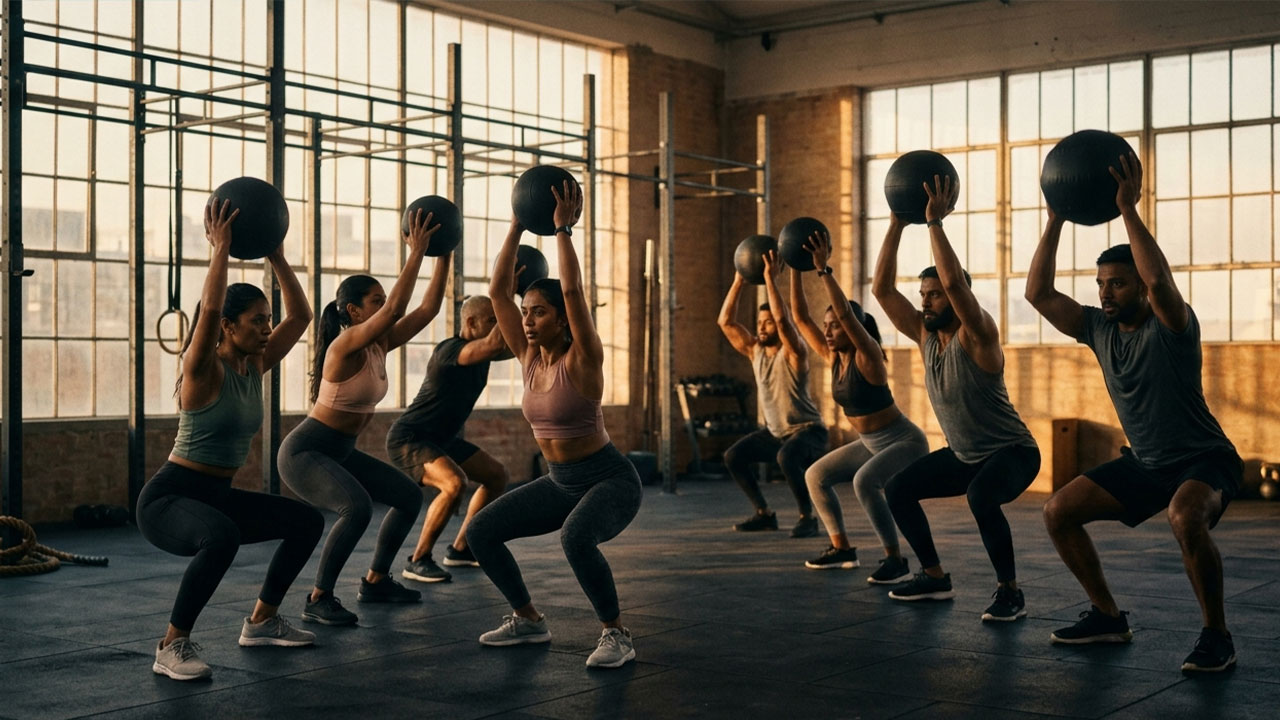
There is something that happens when two people do the same movement at the same time. It creates a rhythm. And rhythm, surprisingly, is one of the most effective tools for sustaining effort through discomfort.
Research on synchronized movement, whether in military units, rowing crews, or group exercise classes, consistently shows that people who move in sync with others experience lower perceived exertion. In other words, the same amount of work feels easier when you are doing it in unison.
A synchronized partner workout might include: side-by-side squat holds for time, matching each other rep-for-rep on push-ups, or performing a dumbbell circuit together with a shared count. The rule is simple, neither partner moves to the next rep until both are ready.
This structure also builds something beyond physical fitness. It builds the kind of trust and communication that spills out of the gym and into real life. Members at GCP who started training together as strangers have become close friends precisely because of this shared experience of pushing through something hard together.
Try This: Pick two movements you both want to improve. Do them side by side, rep for rep, for five rounds. The partner who is further ahead holds the position and waits. That pause creates accountability in both directions.
4. The Support Hold: Rest Becomes Work
This is the structure where most people have a light bulb moment. In a support hold workout, one partner is actively exercising while the other is holding a static position. The second partner’s hold is what allows the first to rest.
Example: Partner A does dumbbell rows while Partner B holds a dead hang from the pull-up bar. When Partner A finishes, both switch. Neither person gets a passive rest, they are always doing something. But the variety between active and static work means neither person is continuously at maximum effort.
This format is brutally effective for building muscular endurance, improving mental toughness, and creating a sense of shared suffering that is oddly bonding. Ask anyone who has ever held a plank while their partner finished their burpees whether they were focused on anything other than that shared goal.
At GCP, our coaches use this structure to build the kind of full-body conditioning that solo training rarely touches, because solo training rarely has the stakes to keep both the active and the rest periods honest.
Try This: Pair a challenging hold (wall sit, plank, dead hang) with a complementary active movement. Alternate for four to six rounds. Keep rest between switches to under fifteen seconds.
5. The Partner Challenge: Add Stakes, Get More
The most underestimated motivational tool in fitness is a specific challenge with a defined outcome and a witness.
A partner challenge takes any workout and adds a layer of competition or cooperation with a finish line. It might be: who can accumulate 100 kettlebell swings fastest. Or can both partners together row 2,000 meters in under eight minutes. Or a decreasing ladder, 10 reps each, then 9, then 8, finishing before a set time.
Challenges work because the brain responds differently to defined endpoints than to open-ended effort. When you know exactly what done looks like, your pacing changes, your commitment deepens, and your post-workout satisfaction is significantly higher.
At Game Changing Performance, challenges are built into our programming on purpose. Not to create anxiety, but to give members something specific to chase and something real to celebrate when they cross the line. Wodify Pulse tracks the results so the progress is visible and repeatable. You don’t just feel like you worked hard, you have the data to prove you got better.
Try This: Set a combined rep target that feels just out of reach for both of you. Split the work however you want. Finish the target. Then try to beat your time next session.
The GCP Difference: Community Is Not a Bonus. It’s the Product.
Everything described above, the relay format, the pacing, the synchronization, the shared challenges, is not something you have to organize yourself and hope your gym supports. At Game Changing Performance in Mundelein, this is the environment. It is the air in the room.
We did not build a gym where you plug in your headphones and hope the person next to you does not bother you. We built a place where the person next to you is the reason you came back.
Our coach-led sessions create natural partner moments within every class. Our community is close-knit enough that members know each other’s names, goals, and schedules. When someone is missing, people notice. When someone hits a milestone, the room feels it. That is not an accident. That is intentional design, built around the understanding that humans perform better, stay more consistent, and actually enjoy fitness more when they do it with people they care about.
Members who walk through our doors nervous about whether they will fit in leave their first session talking about who they can bring next time. That shift, from solo struggle to social momentum, is where real transformation begins.
Want to experience the energy of training with a community that actually shows up for each other?
Explore Our Accelerated Fat Loss Program at GCP!
Frequently Asked Questions
Do I need to bring a partner to work out at GCP?
Not at all. Our group sessions naturally create partner opportunities within the class structure, so you will find yourself working alongside others from day one. You do not need to walk through the door with someone. Many of our closest training partnerships started between two people who were strangers on their first visit.
Are partner workouts suitable for beginners?
Absolutely. All partner formats at GCP are scaled to the individual. Our coaches ensure that both partners are working at their appropriate level, so the experience is challenging without being overwhelming regardless of where you are starting from.
What if I work out with someone who is much fitter than me?
This is actually a feature, not a problem. The Köhler Effect research is clear, working with someone more capable than you elevates your performance in ways that training with someone at your identical level does not. Our coaches manage the pairing and programming so both partners are pushed appropriately.
How often should I include partner workouts in my routine?
If you are training three to five days a week, incorporating a partner-based session one to three times per week tends to produce the best results in terms of accountability and performance. At GCP, the community format means social training is built into every session, so you do not have to plan for it separately.
Can partner workouts replace individual training?
They can coexist beautifully. Partner training excels at accountability, effort, and consistency. Individual training allows you to focus on specific personal weaknesses. GCP’s programming integrates both in a way that gives members the benefits of each without having to choose between them.
Stop Training Alone. Start Doing This Together.
Solo training has its place. But if you have ever spent months grinding through workouts in isolation and wondering why your consistency keeps cracking, the missing piece is probably not a different exercise or a new meal plan. It is a person standing next to you who is counting on you to show up.
Partner workouts are not just more fun, though they absolutely are. They are scientifically proven to increase effort, improve consistency, and make fitness feel less like a sacrifice and more like something worth doing. When training becomes something you share, it becomes something you protect. The gym stops being an obligation and starts being the part of your week you look forward to most.
At Game Changing Performance in Mundelein, we built a place where that transformation happens every single day. Where people who thought they were not gym people become the most consistent version of themselves, because they found a community that made showing up feel like the obvious choice.
The only thing that changes when you walk through our doors is everything.
Ready to stop going it alone and start training with people who make you better?
Start Your 28 Days for $28 Trial at GCP Today!