
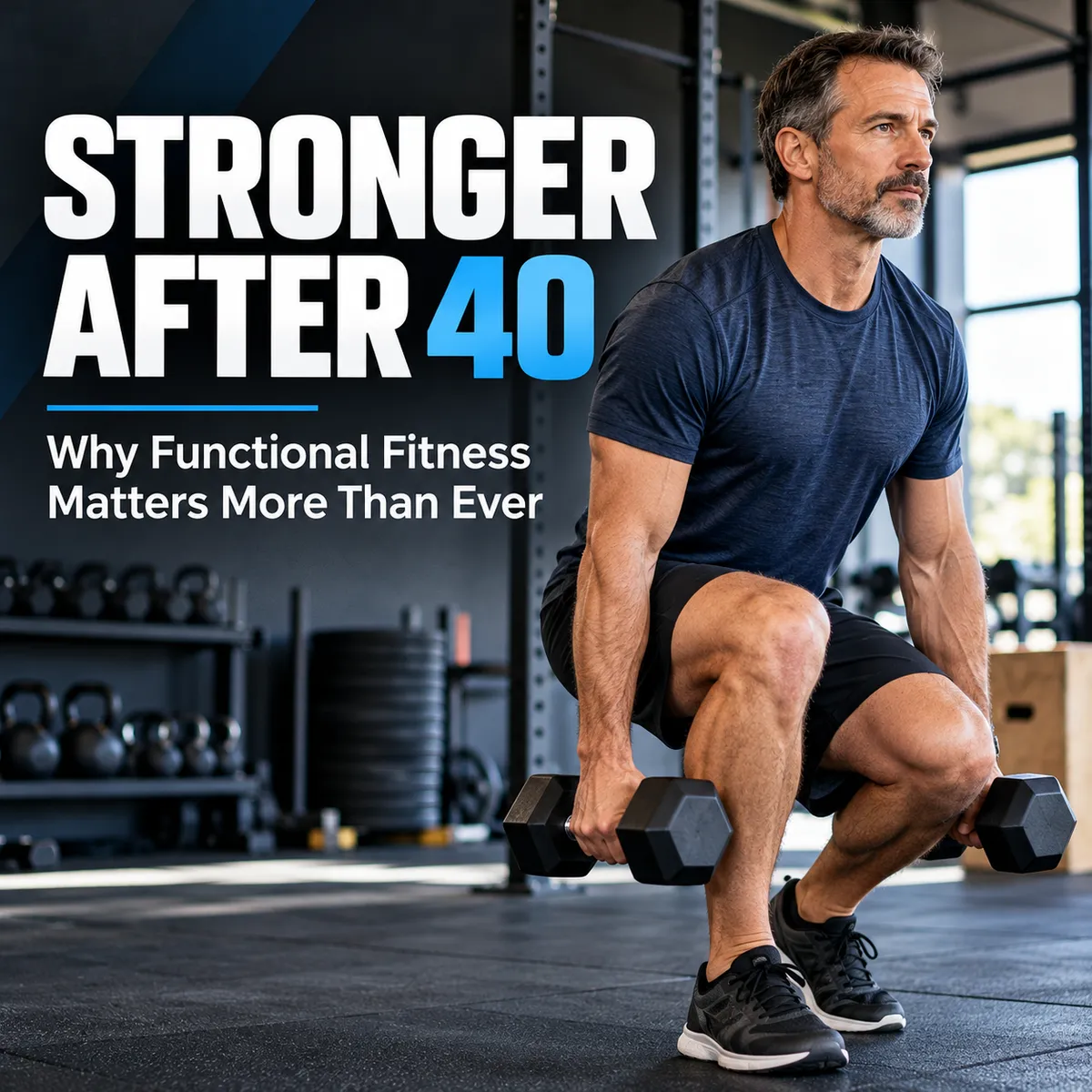
Why Functional Fitness Matters More Than Ever After 40
Somewhere around your 40s, your body starts sending small signals. Getting off the floor takes a little more effort. Your lower back complains after a day of gardening. Carrying groceries up the stairs feels harder than it used to.
None of this means you're "getting old." It means your body is asking for a different kind of training. That's where functional fitness comes in.
What Is Functional Fitness?
Functional fitness is exercise that trains your body for the movements you actually do in daily life: squatting, lifting, pushing, pulling, twisting, balancing, and carrying. Instead of isolating a single muscle on a machine, you train muscles to work together, the way they do when you pick up a child, load a suitcase into the car, or stand up from a low chair.
The goal isn't a certain look or a personal record. It's a body that moves well, feels strong, and keeps you independent for decades.
Why Your Body Changes After 40
Starting around age 40, most people begin losing muscle mass gradually, a process called sarcopenia. Without resistance training, adults can lose a few percent of their muscle each decade. Bone density, balance, and joint flexibility also tend to decline, and recovery from workouts takes longer.
Add a desk job, long commutes, and less time for movement, and the effects compound. Hips tighten, posture slumps, and the body gets less practice at the basic patterns it needs.
The good news is that these changes are far from inevitable. Strength, balance, and mobility respond well to training at any age, and functional fitness is one of the most efficient ways to do it.
5 Benefits of Functional Fitness After 40
It protects your independence. Standing up, climbing stairs, carrying bags, and getting off the floor are all functional movements. Training them now keeps them easy later.
It reduces injury risk. Training multiple muscles together improves coordination and stability, so your body is better prepared for the unexpected, like a slip on wet pavement or an awkward lift.
It relieves everyday aches. Many nagging pains in the back, hips, and shoulders come from weak or stiff areas that force other parts of the body to compensate. Functional training addresses the root cause.
It improves balance. Falls become a bigger concern with age. Single-leg and stability work sharpen the balance your body relies on without you thinking about it.
It's time-efficient. Compound movements work several muscle groups at once, so a 30-minute session can do the work of several separate exercises.
Mobility Exercises: The Foundation
Strength gets the attention, but mobility is what makes strength usable. Mobility is your ability to move a joint through its full, comfortable range of motion. If your hips are stiff, your squat suffers. If your shoulders are tight, overhead reaching hurts.
Adding a few mobility exercises to your routine pays off quickly. Here are five to start with:
Cat-cow: On hands and knees, alternate arching and rounding your spine. It loosens the back and wakes up the core.
World's greatest stretch: Step into a deep lunge, rotate your torso toward the front knee, and reach one arm to the ceiling. It opens the hips, spine, and shoulders in one move.
90/90 hip switches: Sitting on the floor with both knees bent at 90 degrees, rotate your legs side to side. It restores hip rotation that desk work takes away.
Thoracic spine rotations: Lying on your side with knees bent, open your top arm across your body. It improves upper-back mobility and eases shoulder tension.
Ankle circles and calf stretches: Stiff ankles limit squats and affect balance, so give them regular attention.
Spend 5 to 10 minutes on these before a workout or on their own as a daily reset. Move slowly and breathe, and never push into sharp pain.
A Simple Functional Fitness Routine to Start
You don't need a gym membership or fancy equipment. Try this two or three times a week:
Bodyweight squats or sit-to-stands: 3 sets of 8 to 12
Glute bridges: 3 sets of 10 to 15
Push-ups (on a wall, counter, or floor): 3 sets of 8 to 12
Bent-over rows with a dumbbell or resistance band: 3 sets of 10 per side
Farmer's carry: walk 30 to 40 seconds holding a weight in each hand
Single-leg balance: 30 seconds per side
Start lighter than you think you need to, focus on good form, and increase difficulty gradually. Consistency matters far more than intensity. If you'd like a coach to check your form, the 1st Timers program at Game Changing Performance is a good place to begin.
Tips for Staying Consistent
Start small. Even 15 to 20 minutes counts.
Prioritize recovery. Sleep, hydration, and rest days matter more as you age.
Listen to your body. Discomfort from effort is normal; sharp or joint pain is not.
Check with your doctor before starting a new program, especially if you have existing health conditions or injuries.
Frequently Asked Questions
What is functional fitness in simple terms?
Functional fitness is training that prepares your body for everyday movements like squatting, lifting, carrying, and balancing. It builds strength that carries over to real life, not just to the gym.
Is functional fitness good for beginners over 40?
Yes. Most functional exercises can be scaled down, such as wall push-ups or sit-to-stands from a chair, and made harder as you get stronger. A first-time workout with a coach is an easy way to learn the movements.
How often should I do functional fitness workouts?
Two to three sessions a week is a solid starting point, with a day of rest between them. Short daily mobility work fits around that.
How long should I spend on mobility exercises?
Five to ten minutes a day is enough to notice a difference. Move slowly, breathe, and stop short of sharp pain.
Do I need equipment?
No. Bodyweight movements cover most of the basics. A pair of dumbbells or a resistance band adds options for rows and carries.
Is it ever too late to start?
No. Strength, balance, and mobility improve at any age. Check with your doctor first if you have health conditions or injuries.
The Bottom Line
Your 40s and beyond can be some of your strongest, most capable years, if you train for them. Functional fitness builds the strength, balance, and flexibility that make daily life easier and keep you moving confidently for the long run. Pair it with regular mobility exercises, and you'll be investing in a body that serves you well for decades.
You don't need to overhaul your life. Start with one squat, one stretch, and one walk at a time. When you want more structure, explore our personal training, group fitness classes, or nutrition coaching.