

Why Adults Over 40 Lose Muscle Faster (And How to Stop It)
If you've noticed that staying lean and strong feels harder than it used to, you're not imagining it. After 40, the human body undergoes a gradual but significant shift in how it builds, maintains, and loses muscle. The condition responsible is called sarcopenia, and it affects millions of adults who don't even know they're experiencing it. The good news: it's not inevitable. With the right approach to strength training over 40 and nutrition, you can protect your muscle mass, maintain your metabolism, and perform at a high level for decades to come.
This guide breaks down exactly why muscle loss accelerates after 40 and gives you a clear, evidence-informed roadmap to stop it in its tracks.
What Is Sarcopenia And Why Should You Care?
Sarcopenia is the progressive loss of skeletal muscle mass and strength that occurs as we age. While most people think of it as an older adult problem, the process actually begins in your 30s and picks up speed after 40.
Here's a snapshot of how muscle loss compounds over time:
Left unchecked, sarcopenia doesn't just affect how you look it impacts your energy levels, injury risk, metabolic health, and long-term independence. That's why taking action in your 40s is one of the most important things you can do for your future self.
The Four Main Reasons Muscle Loss Speeds Up After 40
1. Declining Anabolic Hormones
Testosterone, growth hormone, and IGF-1 all play critical roles in muscle protein synthesis the process by which your body builds and repairs muscle tissue. After 40, levels of these hormones begin a natural, steady decline.
Testosterone drops approximately 1–2% per year after age 30
Growth hormone production can fall by up to 14% per decade
Lower IGF-1 reduces the body's sensitivity to muscle-building signals
This hormonal shift doesn't mean you can't build muscle but it does mean your body becomes less efficient at it, and recovery takes longer.
2. Anabolic Resistance
Younger muscles respond robustly to protein intake and exercise by ramping up protein synthesis. As you age, this response blunts a phenomenon called anabolic resistance. Your muscles essentially become harder to stimulate and slower to respond, even when protein intake is adequate.
This is one reason why nutrition coaching that prioritizes protein distribution throughout the day becomes especially important after 40.
3. Reduced Physical Activity and Training Stimulus
Life gets busy. Between career demands, family commitments, and the accumulated wear of decades on your joints, many adults over 40 naturally reduce the intensity or frequency of their workouts or stop training altogether. Without a consistent mechanical stimulus, the body has no reason to maintain muscle tissue.
The key isn't training harder. It's training smarter with a structured performance program built around your current capacity and recovery needs.
4. Poor Protein Intake and Distribution
Most adults significantly underestimate how much protein they need as they age. The standard recommendation of 0.8g/kg bodyweight is far below what research suggests is optimal for muscle preservation in adults over 40. Compounding the issue is protein distribution eating the majority of your protein in one meal (common in many diets) is far less effective than spreading it throughout the day.
How to Stop Muscle Loss After 40: A Proven Strategy
Prioritize Strength Training Consistently
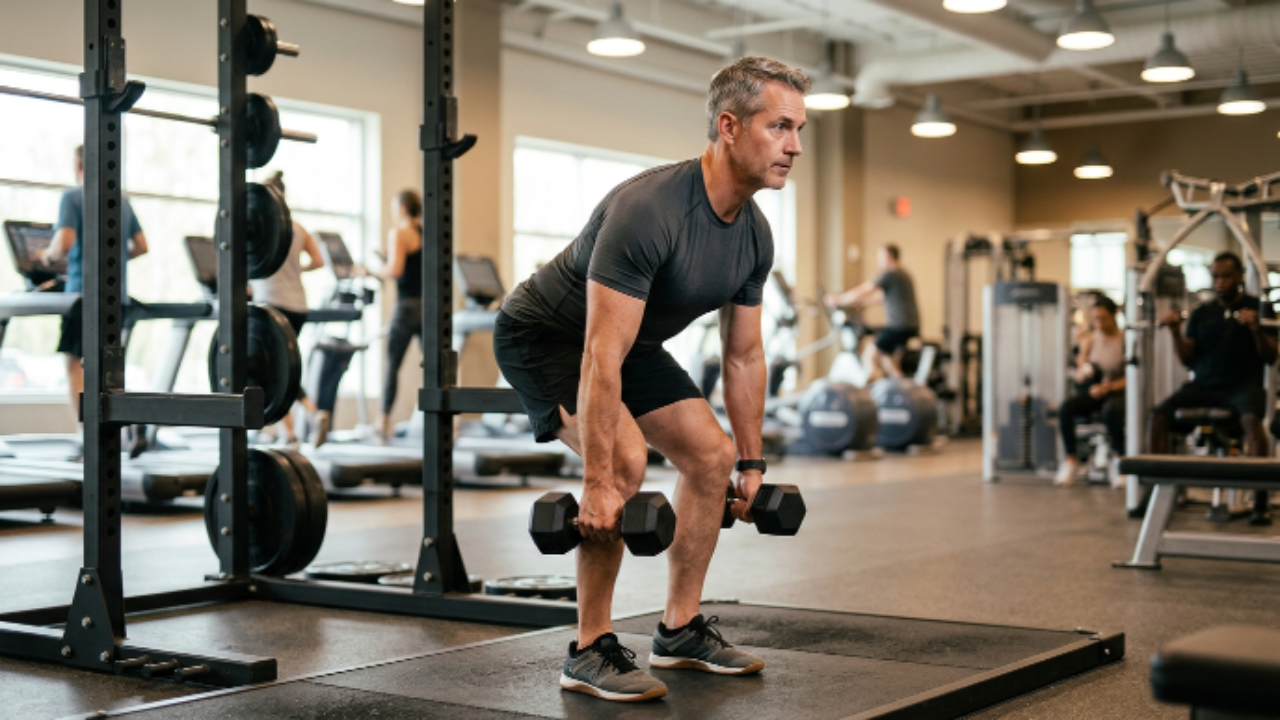
Resistance training is the single most effective intervention for combating sarcopenia. The goal isn't just to get stronger it's to provide a regular mechanical signal that tells your body muscle is worth preserving.
For adults over 40, an effective strength training plan includes:
2–4 sessions per week of progressive resistance training
Emphasis on compound movements: squats, deadlifts, rows, presses, carries
Adequate load studies consistently show heavy resistance training outperforms light-load training for muscle preservation
Progressive overload gradually increasing volume or intensity over time
If you're new to structured strength work or returning after time off, a performance assessment at Game Changing Performance can identify your baseline and build a plan from there.
Hit Your Protein Targets Every Single Day
For adults over 40, current research supports a protein intake of 1.6–2.2g per kilogram of body weight per day to support muscle retention and growth. That's significantly higher than the outdated RDA.
Equally important: distribute protein across 3–4 meals rather than concentrating it in one sitting. Aim for at least 30–40g of high-quality protein per meal to maximally stimulate muscle protein synthesis. Leucine-rich foods like chicken, eggs, Greek yogurt, and whey are particularly effective.
Don't Neglect Recovery
After 40, recovery is no longer optional it's a performance variable. Inadequate sleep and chronic stress both spike cortisol, which actively promotes muscle breakdown.
Sleep 7–9 hours per night this is when muscle repair and growth hormone release peak
Manage psychological stress through structured downtime, mindfulness, or movement
Build deload weeks into your training program every 4–6 weeks
Address Hormonal Health
If you've been doing everything right training consistently, eating enough protein, sleeping well and you're still losing ground, it may be worth discussing your hormonal status with a physician. Low testosterone and thyroid dysfunction are both common contributors to accelerated muscle loss in adults over 40 that often go undiagnosed.
Ready to Build a Stronger, More Resilient Body After 40?
Game Changing Performance offers personalized training programs and coaching designed specifically for adults who want to train hard, recover well, and stay strong for life.
What Not to Do: Common Mistakes That Accelerate Muscle Loss
Chronic cardio without resistance training. Steady-state cardio is valuable for heart health, but relying on it exclusively without strength work — accelerates muscle loss.
Low-calorie crash dieting. Large caloric deficits without adequate protein cause the body to cannibalize muscle for energy. Any fat loss phase should be gradual and protein-supported.
Avoiding the gym due to joint pain. Pain is often a movement quality issue, not a reason to stop loading. A properly designed corrective program can address dysfunction and get you training pain-free.
Training the same way you did at 25. Recovery capacity changes. Programming must evolve to match your physiology and lifestyle at 40+.
Frequently Asked Questions
Can you build muscle after 40?
Absolutely. While it requires more intentional effort than in your 20s, research consistently shows that adults in their 40s, 50s, 60s, and beyond can build meaningful muscle with progressive resistance training and adequate protein. The process is slower, but it is absolutely achievable.
How much protein do I need after 40?
Most research recommends 1.6–2.2g of protein per kilogram of bodyweight per day for muscle preservation and growth in adults over 40. A 180-pound (82kg) adult would aim for roughly 130–180g of protein daily, spread across multiple meals.
Is sarcopenia reversible?
Sarcopenia can be significantly slowed and partially reversed through consistent resistance training and proper nutrition. While some age-related changes are irreversible, the rate of muscle loss can be dramatically reduced and functional strength, mobility, and muscle mass can all be improved at any age.
How often should adults over 40 strength train?
Most adults over 40 benefit from 2–4 strength training sessions per week, with adequate recovery time between sessions targeting the same muscle groups. Quality, progressive programming matters more than sheer frequency.
What type of exercise is best for preventing muscle loss?
Progressive resistance training using free weights, machines, or bodyweight loaded appropriately is the most evidence-based intervention for preserving and building muscle after 40. Compound movements that work large muscle groups simultaneously tend to produce the greatest results.
The Bottom Line
Muscle loss after 40 is real, measurable, and most importantly stoppable. Sarcopenia is not an inevitable part of aging. It is a response to declining anabolic hormones, inadequate training, insufficient protein, and poor recovery. Address those variables, and you change the trajectory entirely.
The adults who feel the strongest and most capable in their 50s and 60s didn't stumble into that they made deliberate choices about how they train and eat in their 40s. The best time to start is now.
Whether you're starting from scratch or looking to optimize what you're already doing, the team at Game Changing Performance can help you build a plan that fits your life, your body, and your goals.
Take the First Step Toward Stronger After 40
Start with a performance assessment to identify your gaps and build a plan that works for your body right now.